March 6, 2026personDr. Monika Diaz, PhDschedule3 min readvisibility53 views
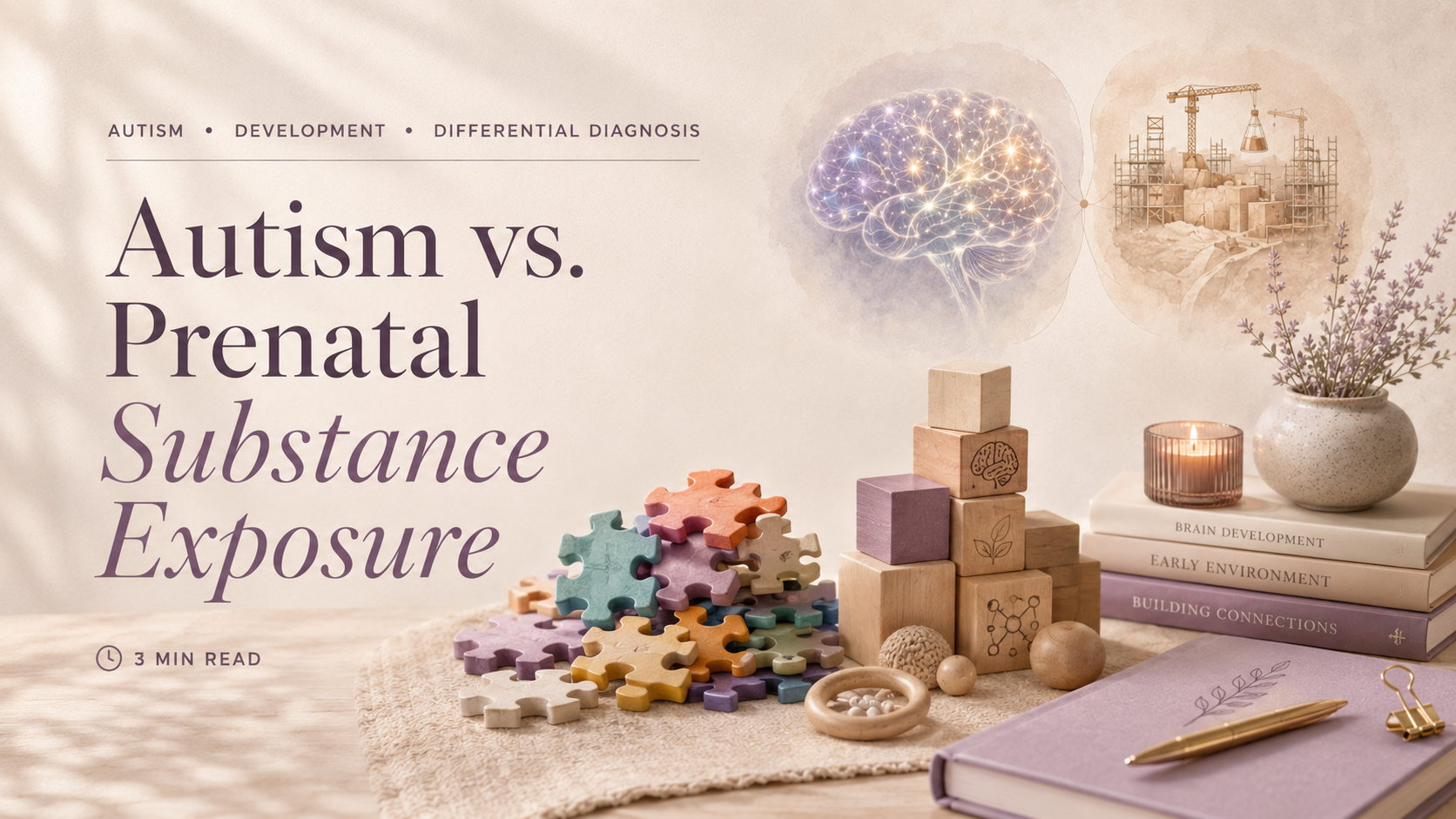
When Two Developmental Stories Look Similar (But Aren't)
Every so often in psychology, two things can look very similar on the surface… but come from completely different stories underneath.
One of the most common examples of this happens when people compare Autism Spectrum Disorder with neurodevelopmental differences related to prenatal substance exposure (meaning substances confirmed during pregnancy).
Both can affect behavior. Both can affect learning. Both can affect attention and emotional regulation.
But neurologically speaking, these two paths into the brain are very different.
Let's talk about it.
Autism: A Brain Wired Differently From the Beginning
Autism isn't something that happens to a child after birth.
Autism reflects how the brain develops and organizes itself from very early in life, largely influenced by genetics and early neurodevelopment.
Autistic brains often process the world in ways that are:
• deeply detail-focused • sensory aware (sometimes very sensory aware) • pattern oriented • highly structured
This is why you may see things like:
• strong interests in specific topics • preference for routines or predictability • differences in social communication • sensory sensitivities
Autism isn't a damaged brain.
It's a differently wired brain.
Many autistic individuals grow into brilliant engineers, artists, programmers, scientists, and thinkers because their brains notice patterns and information that others miss.
Autism is less about something going wrong and more about the brain running a different operating system.
Prenatal Substance Exposure: When the Developing Brain Encounters Disruption
Now let's talk about the other pathway.
When substances such as alcohol, opioids, methamphetamine, cocaine, or other drugs are present during pregnancy, the developing brain may be exposed to chemicals during very delicate stages of development.
The brain forming inside the womb is doing millions of things at once:
• building neural connections • organizing brain structures • forming regulation systems • establishing learning networks
When substances enter that environment, they can interrupt those construction projects.
Children with confirmed prenatal substance exposure may show:
• impulsivity • attention regulation difficulties • learning delays • emotional regulation struggles • trouble understanding cause and effect • challenges with executive functioning
In the case of alcohol exposure, clinicians may diagnose conditions under Fetal Alcohol Spectrum Disorders (FASD).
In simple terms, the brain isn't just wired differently — parts of its developmental construction were disrupted during formation.
Why These Two Things Get Confused
Here's where things get tricky.
From the outside, both conditions can show:
• difficulty with attention • social challenges • behavioral regulation issues • learning differences
So someone might see a child struggling with social interaction or emotional regulation and assume "autism."
But sometimes what clinicians are actually seeing are executive functioning and regulatory systems affected by prenatal exposure.
This is why good clinicians spend a lot of time asking about developmental history — including pregnancy history when available.
Because behavior alone does not tell the whole neurological story.
The Goal Is Understanding — Not Blame
It's important to say this clearly.
When prenatal substance exposure is involved, the goal is never blame.
Substance use during pregnancy often exists inside complex realities involving addiction, trauma, lack of healthcare access, poverty, or untreated mental health conditions.
Blame doesn't help a child.
Understanding does.
The Big Takeaway
Two children might look similar in a classroom.
Both may struggle with attention.
Both may have emotional regulation challenges.
Both may have learning differences.
But one brain may be wired differently from the start.
The other brain may have experienced interruptions while it was being built.
Different origins.
Different neurological pathways.
Different support strategies.
And that's exactly why good psychological assessment matters.
Because every brain deserves support that matches its real story.
Every developing brain deserves curiosity before conclusions. 🧠
Enjoyed this article?
Get notified when we publish new insights.